Trees for fodder
Trees have often provided fodder for grazing animals, especially in dry areas or drought years when grasses may not thrive, as the trees are able to abstract water at greater depths in the soil, however, they may not always provide sufficient nutrients. Trees should be allowed to regenerate after droughts/fire. Lower branches of trees may sometimes need to be pruned so that some parts of the plant are out of reach of stock and thus can provide future growth. Many large herbivores living in the wild are Ungulates, for example buck, deer and elephants, and they frequently forage on trees/bushes.
Many trees eaten by stock contain sufficient protein for maintenance and some may provide more than is required but they may be low in carbohydrates for energy. They may maintain their nutritive value even when mature compare to grasses. Many of them may be low in minerals, particularly phosphorus. Additionally, they may not be palatable to some animals.
Trees can be lopped to provide food or there are cases where whole trees are pushed over with a bulldozer. However, the latter practice is very destructive and regrowth may be very poor unless there are lots of seedlings which rapidly regenerate.
Some trees species commonly used to provide feed around the world are discussed below.
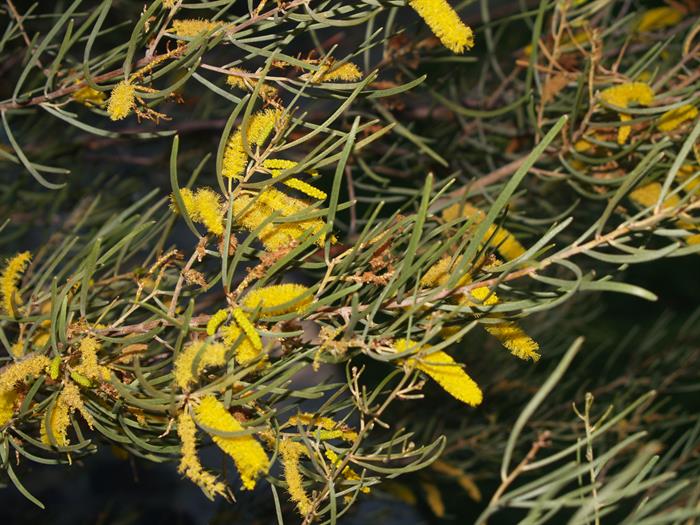
Mulga (Acacia aneura)
Mulga trees are an important source of fodder in Australia as they are widespread, and palatable. For sheep, 1.4 kg of mulga leaf per head per day will provide sufficient protein, Vitamin A and calcium but the leaves may be low in phosphorus and carbohydrates. This can be supplemented with things such as cottonseed meal, urea, molasses and salt. If mulga is plentiful, whole trees could be knocked down but at least 200 trees should be left per hectare. Regrowth will occur if the centre is broken out with a front end loader provided some horizontal side branches 40 (laterals) are left below the break.
Leucaena (Leucaena leucocephala)
Leucaena, also known as Vi vi, white lead tree, wild tamarind and many other local names, is now widespread around the world. It is considered a weed in many areas as it spreads easily due to prolific seeding and regrowth after cutting. It is a small tree or shrub, usually growing about 2 to 10 m tall and has fern-like leaves. It grows prolifically in warm regions but is sensitive to frosts and it tolerates a wide variety of soils. Leucaena is a legume, growing well in impoverished soils and it is drought resistant so can grow in low rainfall areas. Foliage contains about 18% protein. It recovers quickly from heavy grazing. Yields of up to 50 tonnes per hectare per year can be expected under a variety of conditions) and it is usually managed by keeping woody stems trimmed to encourage production of leafy shoots. Some types, if eaten in large quantities, can cause loss of hair or wool in browsing animals due to their mimosine (an amino acid) content.
Gliricidia (Gliricidia sepium)
This is a small to medium-sized, thornless tree which may grow to a height of 10 to 12 m. The bark is smooth but can vary in colour from whitish grey to deep red-brown. It adapts to a wide range of well drained soils and is usually found in areas with rain exceeding 600 mm although it is drought tolerant. It is usually deciduous in the dry season. It tolerates repeating cutting and can yield from 2 to 20 tonnes per hectare per year depending on conditions. Gliricidia has a high nutritive value with crude protein content up to 30% but is not always palatable to stock due to the volatile compounds released from the leaf surface. Leaves can therefore be wilted for 12-24 hours before being used as feed to increase palatability. Leaves, whilst not toxic to ruminants, are potentially toxic if fed in large quantities to monogastric animals such as rabbits and poultry.
Tagasaste (Chamaecytisus proliferus)
Tagasaste, also called tree lucerne, is a small evergreen leguminous tree or shrub growing to a height of about 4 m with yellow grey bark, trifoliate leaves and pale white to cream flowers. It is fast growing under most conditions and reaches its full potential in three to four years. It is propagated from seeds or from cuttings. Tagasaste usually grows better in sandy soils. Mature trees are tolerant of frosts. Under good conditions it may yield about 15 tonnes dry matter per hectare and it recovers quickly after heavy grazing. Legumes, producing their own nitrogen are ideal for impoverished soils, but require free-draining soils. The foliage may contain up to about 27% protein, although this may lower in some areas. As tagasaste roots more deeply than lucerne, it may have a greater tolerance to drought.
Extract from our ebook: Feeding Animals